
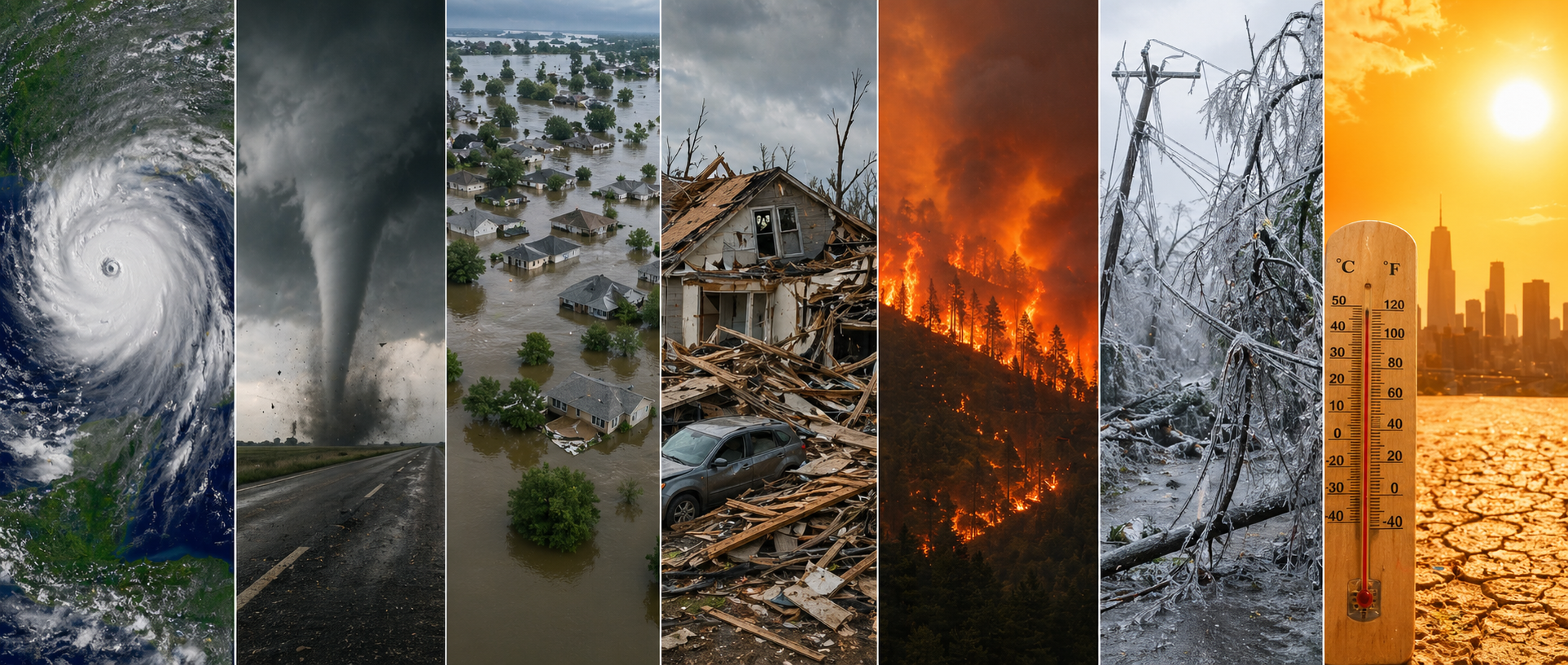
National Hazards
Hurricanes and Tropical Storms
The hazard:
Hurricanes and tropical storms are large rotating storm systems that form over warm ocean waters and can bring destructive winds, storm surge, inland flooding, tornadoes, dangerous surf, and long-duration power outages. The most dangerous part of a hurricane is often not the wind itself, but the water: storm surge along the coast and freshwater flooding far inland can make roads impassable, damage homes, and cut off access to emergency services.
How to prepare:
Know your specific risk before hurricane season starts. Determine whether your home is in a storm surge zone, flood zone, or evacuation zone. Identify where you would go if ordered to evacuate, how long it would take to leave, what route you would use, and where pets would be accepted.
Prepare your home before a storm approaches. Secure loose outdoor items, trim weak branches, inspect roof and gutters, test sump pumps if applicable, and consider window protection in hurricane-prone areas. Review your homeowners, renters, flood, and windstorm insurance before hurricane season, not when a storm is already on the map.
Build a hurricane kit that supports several days without power or normal services. Include water, shelf-stable food, medications, flashlights, batteries, phone chargers, cash, hygiene supplies, copies of key documents, pet supplies, and a NOAA Weather Radio or another reliable alert source. After a storm, avoid flooded roads, downed power lines, damaged bridges, and reenter evacuated areas only when officials say it is safe.
Tornadoes
The hazard:
Tornadoes are violently rotating columns of air that extend from thunderstorms to the ground. They can destroy homes, flip vehicles, throw debris, and cause life-threatening injuries in seconds. Tornadoes can occur during the day or night, and they may be hidden by rain, darkness, trees, or terrain.
How to prepare:
Identify your safest shelter location before severe weather is expected. The best option is a storm shelter, safe room, or basement. Without one, use a small interior room or hallway on the lowest floor, away from windows. Put as many walls as possible between you and the outside.
Keep shoes, a flashlight, phone, weather radio, and helmets or head protection near your shelter area when tornado risk is elevated. This matters especially at night, when people may be asleep and have less time to react. Do not rely on outdoor sirens alone; they are meant for people outdoors and may not wake you inside.
When a Tornado Warning is issued, move immediately. Do not wait to see the tornado. Do not open windows. Do not shelter in a vehicle, mobile home, or under an overpass if a better structure is available. After the tornado, watch for sharp debris, gas leaks, unstable structures, and downed power lines.
Severe Thunderstorms, Damaging Winds, Hail, and Lightning
The hazard:
Severe thunderstorms can produce damaging straight-line winds, large hail, frequent lightning, torrential rain, and sometimes tornadoes. These storms can damage roofs, vehicles, trees, power lines, and windows. Some storms can produce winds over 100 mph and cause tornado-like damage.
How to prepare:
Take Severe Thunderstorm Watches and Warnings seriously. A watch means conditions are favorable and you should be ready. A warning means severe weather is happening or imminent and you should take action. Move indoors into a sturdy structure, away from windows, and avoid porches, open garages, trees, and metal objects.
Bring in or secure outdoor furniture, trash cans, grills, decorations, and other loose items before storms arrive. Park vehicles in a garage or under a carport if large hail is possible. Charge phones and backup batteries when storms are forecast, because severe thunderstorms often cause power outages.
For lightning, the safest place is inside a substantial building or enclosed vehicle. Avoid open fields, water, isolated trees, metal fences, and elevated areas. If thunder is close enough to hear, lightning is close enough to strike.
Flooding
The hazard:
Flooding occurs when water covers normally dry land. It can come from heavy rainfall, overflowing rivers, storm surge, dam or levee failures, snowmelt, or poor drainage. Flash flooding is especially dangerous because it can develop quickly and sweep away vehicles, damage homes, contaminate water, and cut off evacuation routes. Flooding is one of the most common and costly weather hazards in the United States.
How to prepare:
Know whether your home, workplace, school, and regular travel routes are in a flood-prone area. Do not assume you are safe just because you are outside a mapped high-risk flood zone. Flooding can occur in low spots, near creeks, along poor drainage areas, and in places with overwhelmed stormwater systems.
Prepare by moving valuables, important documents, and critical equipment above likely flood levels. Consider flood insurance, because standard homeowners insurance usually does not cover flood damage. Keep gutters, drains, and sump pumps maintained. If you use a sump pump, consider battery backup power.
During flooding, never drive through flooded roads. Water can be deeper, faster, or more destructive than it appears, and the road underneath may be washed out. If water is entering your home and you cannot safely evacuate, move to higher levels, but avoid entering an attic unless you have a way to escape through the roof if necessary.
Winter Storms
The hazard:
Winter storms can bring heavy snow, sleet, freezing rain, high winds, dangerously cold temperatures, and long-duration travel disruptions. Winter storms can trap motorists, make roads impassable, knock out utilities, and expose people to frostbite or hypothermia. Freezing rain is especially dangerous because it can coat roads, trees, and power lines with ice.
How to prepare:
Prepare your home before winter weather arrives. Make sure you have a safe heat source, working smoke alarms, carbon monoxide detectors, flashlights, batteries, blankets, food, water, and medications. Insulate or protect vulnerable pipes and know how to shut off water if a pipe bursts.
Prepare your vehicle with a winter emergency kit. Include blankets, water, snacks, jumper cables, phone charger, flashlight, ice scraper, gloves, first-aid supplies, traction material, and a small shovel. Avoid unnecessary travel during winter storms, especially during blizzard conditions or ice storms.
If the power goes out, use generators only outdoors and far away from windows, doors, and vents. Never use a grill, camp stove, or gas oven to heat your home. Check on older adults, neighbors, and anyone who may have limited mobility or medical needs during prolonged cold.
Ice Storms
The hazard:
Ice storms occur when rain falls into a shallow layer of freezing air near the ground and freezes on contact. This can create a glaze of ice on roads, sidewalks, trees, power lines, and structures. Even a small amount of ice can make walking and driving dangerous; heavier ice accumulation can bring down trees and cause widespread, long-lasting power outages.
How to prepare:
Before an ice storm, charge phones, battery banks, medical devices, and rechargeable lights. Have enough food, water, medication, pet supplies, and heating alternatives to remain home for several days. Avoid parking vehicles under trees or power lines if significant icing is expected.
Limit travel during freezing rain. Roads and bridges can become dangerously slick before they look hazardous. If you must walk outside, move slowly, wear traction-friendly footwear, and assume steps, porches, and sidewalks may be icy.
Because ice storms often cause power outages, plan for safe backup heat. Use generators outdoors only, keep carbon monoxide detectors working, and avoid any heating method that produces fumes inside the home.
Extreme Heat
The hazard:
Extreme heat is a period of unusually hot weather, often made more dangerous by humidity, warm nights, poor air quality, and lack of access to air conditioning. Heat can cause heat cramps, heat exhaustion, heat stroke, dehydration, and worsening of existing health conditions. Everyone can be vulnerable to heat, with higher risk for older adults, young children, people with chronic illness, outdoor workers, athletes, and people without reliable cooling.
How to prepare:
Identify how you will stay cool before a heat wave begins. Make sure air conditioning works, locate cooling centers, check on vulnerable family members or neighbors, and plan outdoor work or errands for early morning or evening.
During extreme heat, drink water regularly, avoid strenuous activity during the hottest part of the day, wear lightweight clothing, and spend time in air-conditioned spaces when possible. Fans can help with comfort, but during dangerous heat they may not be enough by themselves, especially when indoor temperatures remain high.
Know the warning signs of heat illness. Heat exhaustion can include heavy sweating, weakness, dizziness, nausea, headache, and cool or clammy skin. Heat stroke is a medical emergency and may include confusion, fainting, very high body temperature, or hot skin. Call emergency services immediately if heat stroke is suspected.
Wildfires
The hazard:
Wildfires are uncontrolled fires that spread through vegetation, neighborhoods, forests, grasslands, or the wildland-urban interface. They can move quickly, produce extreme heat, destroy homes, force evacuations, and create dangerous smoke far from the flames. Wildfire risk is shaped by dry vegetation, wind, drought, terrain, heat, and human activity.
How to prepare:
Create defensible space around your home. Remove leaves, dead vegetation, firewood piles, and other flammable materials near structures. Clean gutters and roofs. Trim branches away from the house. Use fire-resistant landscaping and materials when building or repairing where possible.
Have an evacuation plan before fire threatens your area. Know multiple routes out, keep your vehicle fueled or charged, prepare a go-bag, and include pets, medications, documents, and essential supplies. Sign up for local emergency alerts and leave immediately if told to evacuate.
Prepare for smoke even if flames are far away. Keep windows and doors closed, use high-quality air filtration if available, and limit outdoor activity when smoke levels are unhealthy. People with asthma, COPD, heart disease, older adults, children, and pregnant people may need extra precautions.
Drought
The hazard:
Drought is a prolonged period of below-normal precipitation that reduces water availability for people, agriculture, ecosystems, and fire protection. Drought can develop slowly, but its impacts can be serious: water restrictions, crop damage, stressed trees, lower reservoirs, poor soil conditions, increased wildfire risk, and economic losses.
How to prepare:
Use water wisely before drought becomes severe. Repair leaks, install efficient fixtures, use drought-tolerant landscaping, mulch plants, and water lawns or gardens only when necessary and allowed. Follow local water restrictions early, because delayed conservation can make shortages worse.
Prepare your property for the secondary hazards that come with drought. Dry vegetation increases wildfire risk, so clear debris, maintain defensible space, and avoid outdoor burning or spark-producing activities during dry and windy conditions.
For rural properties, farms, or homes on wells, monitor water levels and have a backup water plan. Store emergency water and understand whether your household, livestock, or business operations depend on vulnerable water sources.
Extreme Cold
The hazard:
Extreme cold occurs when temperatures drop low enough to threaten health, infrastructure, transportation, and utilities. Wind chill makes cold more dangerous by removing heat from the body faster. Severe cold can cause frostbite, hypothermia, frozen pipes, vehicle failures, livestock impacts, and dangerous conditions for people without adequate shelter or heat.
How to prepare:
Before extreme cold, protect your home by insulating exposed pipes, sealing drafts, checking heating systems, and knowing where your water shutoff valve is located. Keep extra blankets, warm clothing, food, water, medication, and backup lighting available.
Dress in layers if you must go outside. Cover hands, ears, face, and feet. Limit time outdoors, stay dry, and watch for signs of frostbite or hypothermia. Hypothermia can include shivering, confusion, exhaustion, slurred speech, or loss of coordination.
Check on people at higher risk, including older adults, people living alone, people without reliable heat, infants, and people with medical needs. Bring pets indoors and ensure livestock have shelter, food, and unfrozen water.
Coastal Flooding
The hazard:
Coastal flooding happens when ocean water is pushed onto normally dry land by storm surge, high tides, strong winds, low pressure, or large waves. Storm surge is especially dangerous during tropical storms and hurricanes because it can push large volumes of water inland, damage buildings, wash out roads, and trap people who wait too long to evacuate.
How to prepare:
Know whether you live, work, or travel through a coastal evacuation zone. Storm surge risk can vary dramatically over short distances, so rely on local emergency management maps rather than guessing based on distance from the beach.
If evacuation orders are issued for storm surge, leave early. Waiting until water rises can make evacuation impossible. Roads may flood before the worst of the storm arrives, and emergency responders may not be able to reach people during dangerous conditions.
Protect property by elevating valuables, moving vehicles to higher ground, securing outdoor items, and reviewing flood insurance. After coastal flooding, avoid standing water, damaged roads, contaminated debris, and structures that may have been weakened by water.
Landslides and Debris Flows
The hazard:
Landslides and debris flows occur when soil, rock, trees, and water move downhill. They are often triggered by heavy rain, rapid snowmelt, earthquakes, wildfire burn scars, poor drainage, or unstable slopes. Debris flows can move quickly and carry boulders, trees, mud, and water with destructive force.
How to prepare:
Know whether your home is near steep slopes, drainage channels, mountain roads, or areas that have burned recently. Pay attention to warning signs such as new cracks in the ground, leaning trees, doors or windows that suddenly stick, unusual water flow, or rumbling sounds during heavy rain.
Improve drainage around your home and avoid directing water onto slopes. Keep gutters, downspouts, culverts, and drainage ditches clear. If you live below a steep slope or near a burn scar, have a plan to leave before intense rainfall begins.
During heavy rain, avoid driving across debris-covered roads or through areas where mud and rock are moving. At night, landslides can be harder to see, so take warnings seriously and evacuate early if local officials advise it.
Power Outages
The hazard:
Weather-related power outages can happen during hurricanes, thunderstorms, ice storms, winter storms, wildfires, heat waves, and high wind events. Outages can disrupt heating, cooling, refrigeration, medical equipment, communications, water systems, and transportation. A short outage can be inconvenient; a long outage can become a safety issue quickly.
How to prepare:
Build an outage plan around the things your household depends on most: medical devices, refrigerated medication, heating, cooling, communications, food storage, and mobility needs. Keep flashlights, batteries, power banks, battery-powered fans, blankets, and shelf-stable food ready.
Use generators safely. Operate portable generators outdoors only and far from windows, doors, garages, and vents. Carbon monoxide is odorless and deadly. Install and maintain carbon monoxide detectors and smoke alarms.
Keep refrigerators and freezers closed as much as possible during an outage. Have a plan for charging phones, receiving alerts, and contacting family if cell service is disrupted. For longer outages, know where you could go for heat, cooling, charging, medical support, or internet access.
Poor Air Quality and Wildfire Smoke
The hazard:
Poor air quality can come from wildfire smoke, dust, pollution, ozone, or other airborne particles. Wildfire smoke can travel hundreds or even thousands of miles from the fire itself. It can irritate the eyes, throat, and lungs, and it can worsen asthma, COPD, heart disease, and other medical conditions.
How to prepare:
Monitor air quality during wildfire season or stagnant weather patterns. Have a plan to reduce indoor smoke exposure by closing windows and doors, limiting outdoor activity, and using effective air filtration when possible.
People with respiratory or heart conditions should keep medications available and follow medical guidance for smoke exposure. Outdoor workers, athletes, children, and older adults may need to reduce exertion when air quality is unhealthy.
Create a cleaner-air room if smoke is expected. Choose one room, keep it closed off from outside air as much as practical, and use a properly sized air purifier if available. Avoid adding indoor pollution from candles, smoking, frying, or vacuuming during smoke events.
Earthquake Hazards
The hazard:
While earthquakes are geological rather than weather hazards, they can create emergency conditions that overlap with weather preparedness: fires, gas leaks, broken water lines, blocked roads, power outages, landslides, and tsunami risk in coastal areas. For a national hazard review, earthquakes may be worth including as a companion hazard because the household preparedness steps overlap heavily with disaster readiness.
How to prepare:
Secure heavy furniture, water heaters, shelves, and items that could fall. Know how to shut off gas, water, and electricity if instructed or if damage is obvious. Keep sturdy shoes, gloves, flashlights, and first-aid supplies accessible.
Build the same core emergency kit used for weather disasters: water, food, medications, documents, communications tools, cash, hygiene supplies, and pet supplies. Make a family communication plan and identify safe meeting places.
After an earthquake, check for injuries, fire, gas smells, structural damage, and downed lines. Avoid damaged buildings and follow local emergency guidance, especially in coastal areas where tsunami alerts may follow strong shaking.
Core Preparedness Message for Every Hazard
Every household should have four basic layers of readiness: alerts, supplies, shelter, and evacuation.
Know your risk. Understand what hazards are most likely where you live, work, travel, and have family.
Get alerts. Have more than one way to receive warnings, including phone alerts, local emergency alerts, weather apps, local news, and NOAA Weather Radio where appropriate.
Build a practical kit. Include water, food, medications, lighting, batteries, chargers, documents, cash, hygiene supplies, pet supplies, and comfort items.
Make a plan. Decide where you will go, how you will leave, who you will contact, and what you will do if power, water, roads, or cell service fail.
Review insurance and documents. Know what your policy covers before disaster strikes. Keep photos, receipts, policy information, IDs, and key records backed up and accessible.
Practice before the storm. Preparedness is not just buying supplies. It is knowing how to use them, where they are, and what decision you will make when warnings are issued.